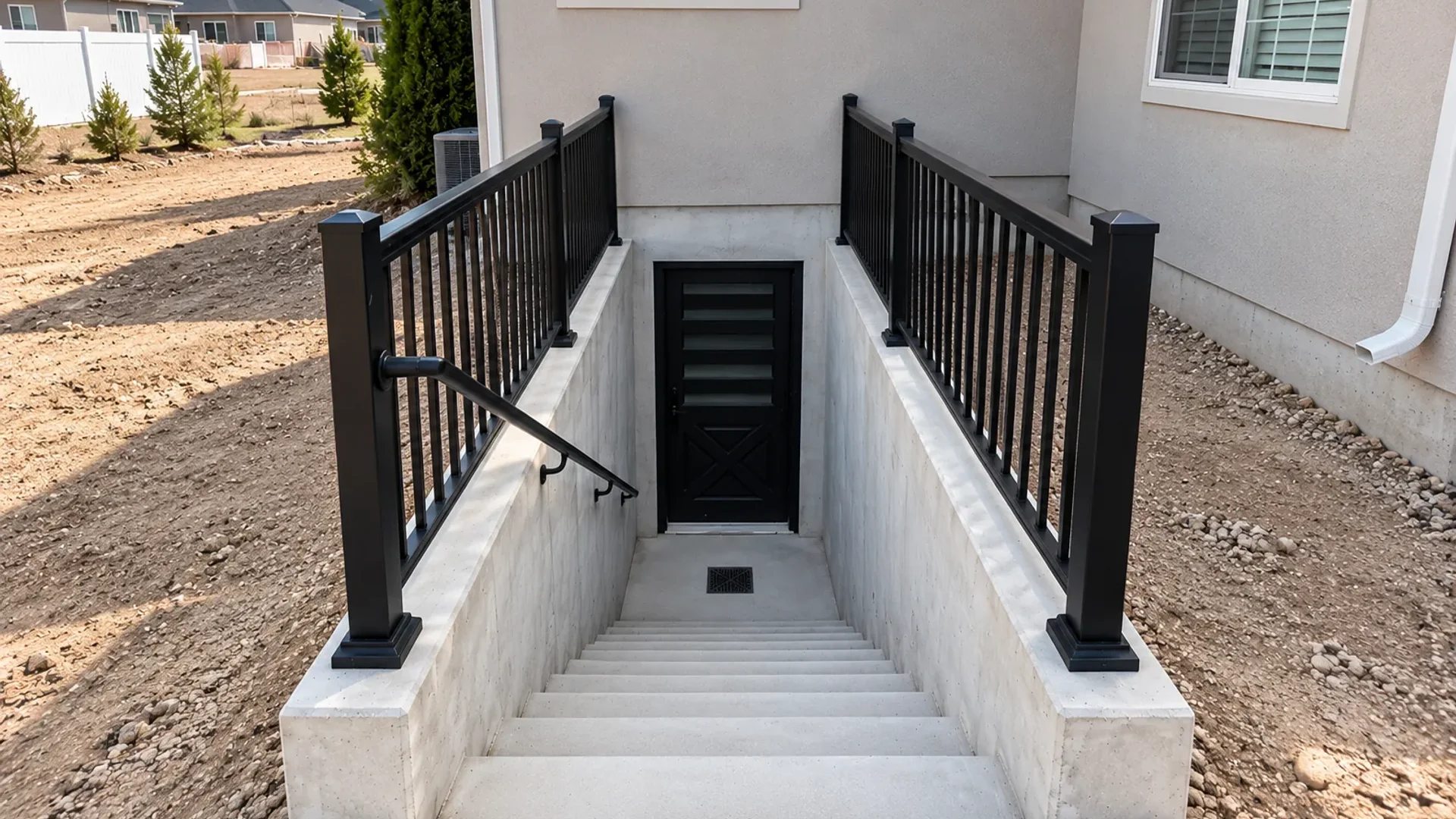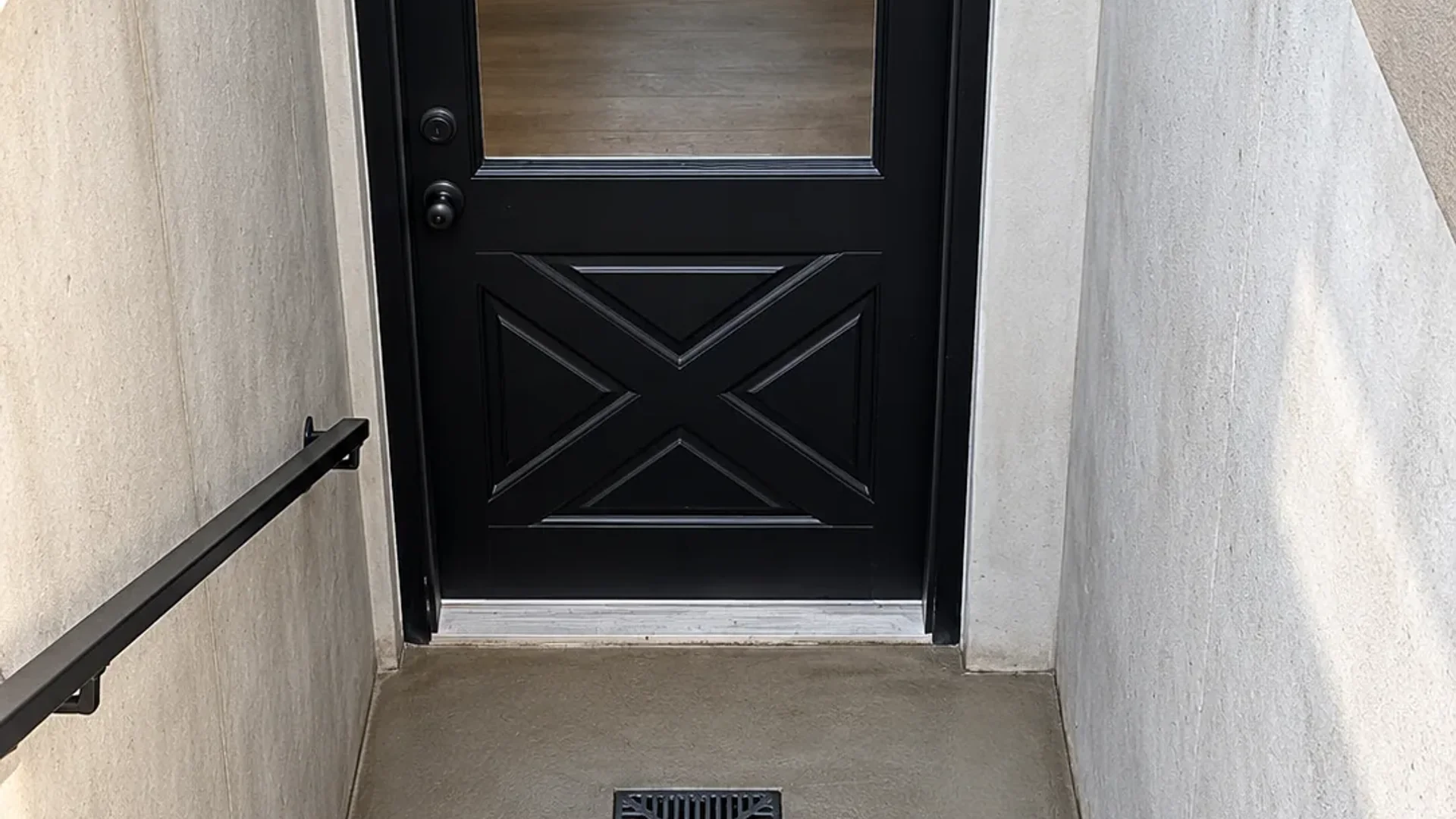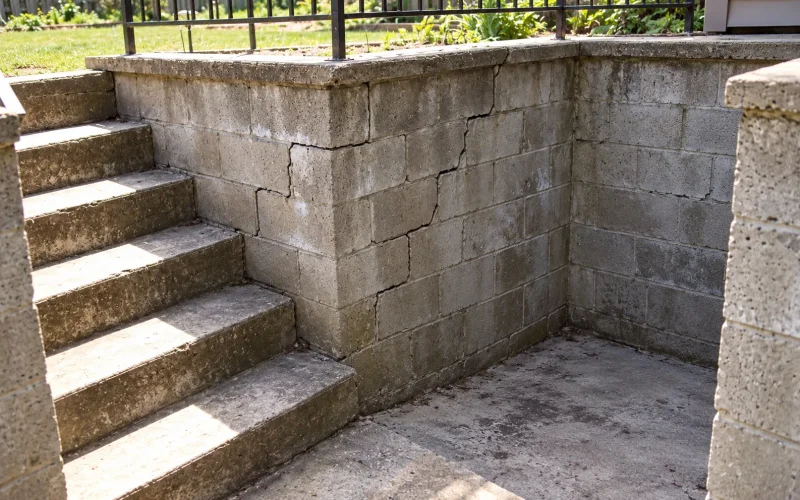
Older and poorly constructed basement walkouts sometimes reach the point where simple repairs are not the right answer.
Leaning walls, structural cracking, rotting railroad ties, unsafe stairs and chronic drainage failures can each call for structural improvements, drainage corrections or complete reconstruction. When that happens, our team has the experience to rebuild the walkout properly rather than just patching what is failing.
That said, the bulk of our work is new basement walkout construction and basement walkout drainage repair, especially on walkouts originally built by other contractors. Drainage correction is where we focus most of our attention, because that is where the most common walkout failures begin. Rebuilding is part of what we do, but it is not our primary service.
What Basement Walkout Rebuilding Involves
A rebuild removes what is failing and builds it back properly from the ground up. The exact scope depends on what the inspection reveals. Typical work includes one or more of the following:
- Structural and drainage evaluation. We assess walls, footings, stairs, railings, the landing, drainage and grading to separate cosmetic wear from structural failure.
- Demolition of failing walls, stairs and landings. Old concrete, block or timber is removed and hauled off.
- Engineered replacement walls and footings. New walls are built to project-specific engineering, not copied from what failed.
- Stair reconfiguration. Where space allows, stairs can be reconfigured for safer, more comfortable access.
- Drainage upgrade. A rebuild is the best time to add an accessible catch basin, reservoir, drain rock and corrected grading, because the walls and landing are already open.
- Permits, engineering and inspection. Rebuilds typically require permits and project-specific engineering, which we coordinate as part of the project.
Our guide on repair vs. rebuild walks through how to tell which path is right for your home.
Signs a Walkout May Need Rebuilding
The most common indicators that a walkout has reached the end of its useful service include walls leaning toward the stairwell or bulging mid-height, wide or growing cracks with displacement, heavy spalling with exposed aggregate or rebar, rotting timber or railroad-tie walls, and stairs that are steep, uneven or unsafe for daily use. When structural problems and chronic drainage problems appear together, rebuilding both at once is usually the smarter investment.
If the structure is sound and only the water is a problem, drainage repair is usually the right call. We will tell you which path makes sense after an onsite evaluation.
Why Experience With Rebuilds Matters
Most failing walkouts have water involved. Rebuilding the walls without addressing the water is one of the fastest ways to repeat the same failure.
Our team handles both sides of the problem. Because the majority of our work is diagnosing and retrofitting drainage on walkouts originally built by other contractors, we see exactly how and why walkouts fail. That perspective shapes how we approach a rebuild: structure and water fixed together, not one without the other.
When Rebuilding Is Not the Right Answer
If your walkout only has drainage problems and the walls and stairs are structurally sound, a rebuild is not necessary. A targeted drainage retrofit is faster, less invasive and a much smaller investment, and it addresses the most common cause of walkout failure.
We will be straightforward about which service fits your situation. If you are weighing repair against rebuild, our repair vs. rebuild guide explains how that decision is made.
Getting Started
If your walkout is showing signs of structural failure, or you are unsure whether you need a rebuild, request a walkout consultation. We will evaluate the structure and the drainage, and give you a written recommendation with the scope and budget laid out.
For walkouts where only the drainage is failing, see our drainage repair page. For a brand-new walkout built with reliable, accessible drainage from day one, see new basement walkout installation.